PTSD, Genetics, and the Promise of Psychedelic Therapy
PTSD, Genetics, and the Promise of Psychedelic Therapy
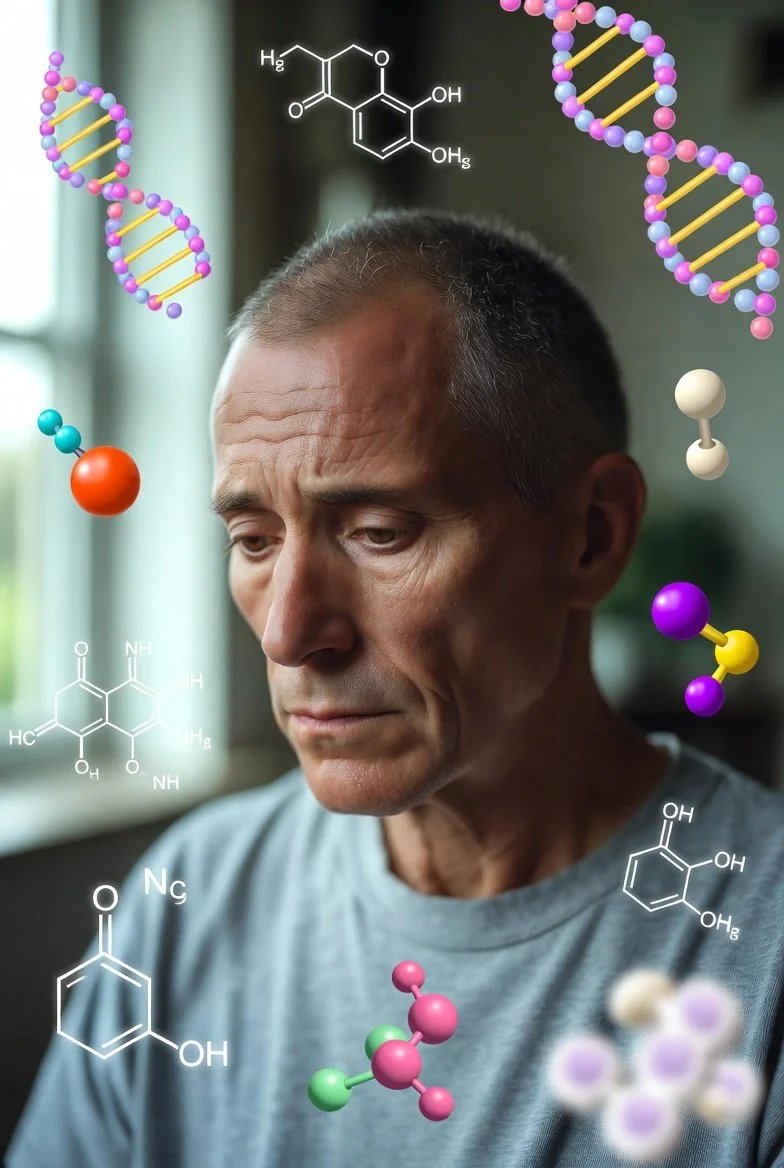
PTSD is not just a battle in the mind. It is a full-body experience, rooted in trauma that can completely reshape how you react to the world. For veterans, military members, and first responders, this weight can feel even heavier, especially if you are carrying something few people talk about: the MTHFR gene mutation.
MTHFR, which stands for methylenetetrahydrofolate reductase, is the gene that codes for an enzyme your body needs to start a process called methylation. Methylation acts like your body’s master control panel. It helps regulate neurotransmitters such as serotonin, which promotes calm, and dopamine, which fuels motivation. It also controls inflammation, detoxifies harmful substances, repairs DNA, and generates energy at the cellular level.
Some of the most common MTHFR gene variants, such as C677T or A1298C, can make this enzyme much less efficient, sometimes by as much as 30 to 70 percent, depending on whether you have one or two copies. This is not rare. Up to 40 percent of people have at least one variant, with higher rates in certain populations. You inherit these variants from your parents, so they are not caused by trauma or lifestyle, but once present, they can interact powerfully with stress and trauma.
When methylation slows down, the effects ripple throughout your system. Production of neurotransmitters drops, leaving you with lower levels of serotonin and dopamine. This can deepen depression and anxiety. Inflammation can rise unchecked, keeping your body in a constant state of low-level stress. Detoxification and energy production can stall, leading to a chronic fatigue that sleep does not fix. Homocysteine, a byproduct, may build up and add even more strain to your brain and nervous system.
Now imagine layering all this onto PTSD. Trauma alone already locks your nervous system into fight-or-flight mode, flooding your body with stress hormones and keeping your brain’s fear center on high alert. If your methylation is compromised, it becomes even harder to recover from triggers. Hypervigilance can start to feel permanent, and standard treatments might not work as well because your body cannot fully process or balance the chemistry needed for healing.
While MTHFR mutations do not cause PTSD, and not everyone with these variants experiences worsened symptoms, they can make the symptoms more intense, persistent, and resistant to treatment for those affected. Research suggests these gene variants can increase vulnerability to depression and other issues after trauma, adding to the biological burden.
Getting tested for MTHFR mutations through panels like GeneSight or specific genetic tests can be eye-opening. It might explain why certain medications are ineffective or why fatigue lingers even after rest. With targeted support, such as bioavailable folate (L-methylfolate), methylated B vitamins, and strategic lifestyle changes, you can help your body work around the bottleneck and move toward healing.
If you have tried traditional routes and still feel stuck, there is promising research into psychedelic-assisted therapy. Compounds like MDMA, psilocybin, and ketamine are being studied for their ability to help people with PTSD, even for those with methylation challenges. These substances do not appear to make MTHFR-related problems worse. Instead, they seem to help by influencing gene expression, shifting how methyl groups attach to DNA, and helping the brain reset its stress response through epigenetic changes.
MDMA-assisted therapy, for instance, has shown lasting relief for many with severe PTSD in clinical trials. A high percentage of participants experience significant symptom reduction, and many no longer meet diagnostic criteria. Researchers have linked these improvements to changes in DNA methylation, especially in genes that help control the body’s response to stress, like NR3C1 in the HPA axis. However, while it holds breakthrough status and strong trial data, the FDA declined approval in 2024 due to concerns around trial design, safety assessments, and other factors. Lykos Therapeutics continues negotiations and potential resubmission, and ongoing studies, including VA-funded trials for veterans with PTSD and related conditions, continue to explore its promise in supervised settings.
Ketamine has shown the ability to provide rapid relief for treatment-resistant PTSD and depression. It changes methylation patterns in a wide range of genes related to the brain and immune system. Some clinicians pair ketamine with L-methylfolate to give people with MTHFR mutations an even better chance at success.
Psilocybin and other classic psychedelics, such as LSD and ayahuasca, are showing early but promising signs of helping the brain become more flexible, process trauma in new ways, and promote neuroplasticity. These treatments may help jump-start beneficial methylation changes that encourage healing, rather than leaving people stuck in old patterns.
Psychedelic therapy is experimental, can carry risks such as temporary dissociation or cardiovascular effects, and should never be tried on your own. It must always be explored with an experienced facilitator in a safe, supervised clinical or therapeutic setting, not DIY. For those who feel blocked by traditional medications or have genetic barriers that make recovery harder, these approaches are emerging as hopeful new options in ongoing research.
Understanding these biological layers is not about blame. It is about empowerment. Trauma is real, but so are the tools that can help lighten its grip. If this resonates with your experience, talk to your VA provider, a functional medicine specialist, or reach out to resources at Grunt Style Foundation for support and next steps. Let’s keep advocating for better options and more research for those who have carried the heaviest loads.
Further Reading On Psychedelics, Epigenetics (DNA Methylation), and PTSD Treatment
Pilot study suggests DNA methylation of the glucocorticoid receptor gene (NR3C1) is associated with MDMA-assisted therapy treatment response for severe PTSD (Frontiers in Psychiatry)
https://www.frontiersin.org/journals/psychiatry/articles/10.3389/fpsyt.2023.959590/full
Key pilot research showing MDMA-assisted therapy links to methylation changes in HPA axis genes like NR3C1, correlating with PTSD symptom reduction.The Psychedelic Future of Post-Traumatic Stress Disorder Treatment (PMC/NIH)
https://pmc.ncbi.nlm.nih.gov/articles/PMC10845102/
In-depth review of psychedelics (MDMA, psilocybin, ketamine, etc.) for PTSD, including discussions of epigenetic mechanisms and trauma processing.Brain-epigenome wide association study (BEWAS) on the effects of two emerging psychedelics: ketamine & MDMA (bioRxiv preprint)
https://www.biorxiv.org/content/10.1101/2025.07.03.663007v1.full-text
Recent study examining how ketamine and MDMA alter DNA methylation at thousands of sites, with ties to mood and trauma disorders.Epigenetic aging and DNA methylation biomarker changes following ketamine treatment in patients with MDD and PTSD: a pilot study (Translational Psychiatry/Nature)
https://www.nature.com/articles/s41398-025-03683-y
Pilot data on ketamine's effects on epigenetic biomarkers, DNA methylation, and reductions in PTSD/depression symptoms, including biological aging markers.Psychedelic-Assisted Therapy for PTSD (National Center for PTSD/VA)
https://www.ptsd.va.gov/professional/treat/txessentials/psychedelics_assisted_therapy.asp
VA overview of psilocybin- and MDMA-assisted therapies for PTSD in veterans, with evidence summaries and safety notes.